Contents
You send a reference shoe and ask for a similar fit. The developer offers an existing last. Its toe profile looks right, and the sample size matches the size you requested.
That is a starting proposal. Before accepting it, clarify what “similar fit” means: who the shoe is for, which reference features matter, what construction is intended, and what the first sample must demonstrate.
This guide helps you prepare those inputs. It does not prescribe last dimensions or tell a last maker how to modify a form.
A last is a starting form, not a complete fit specification
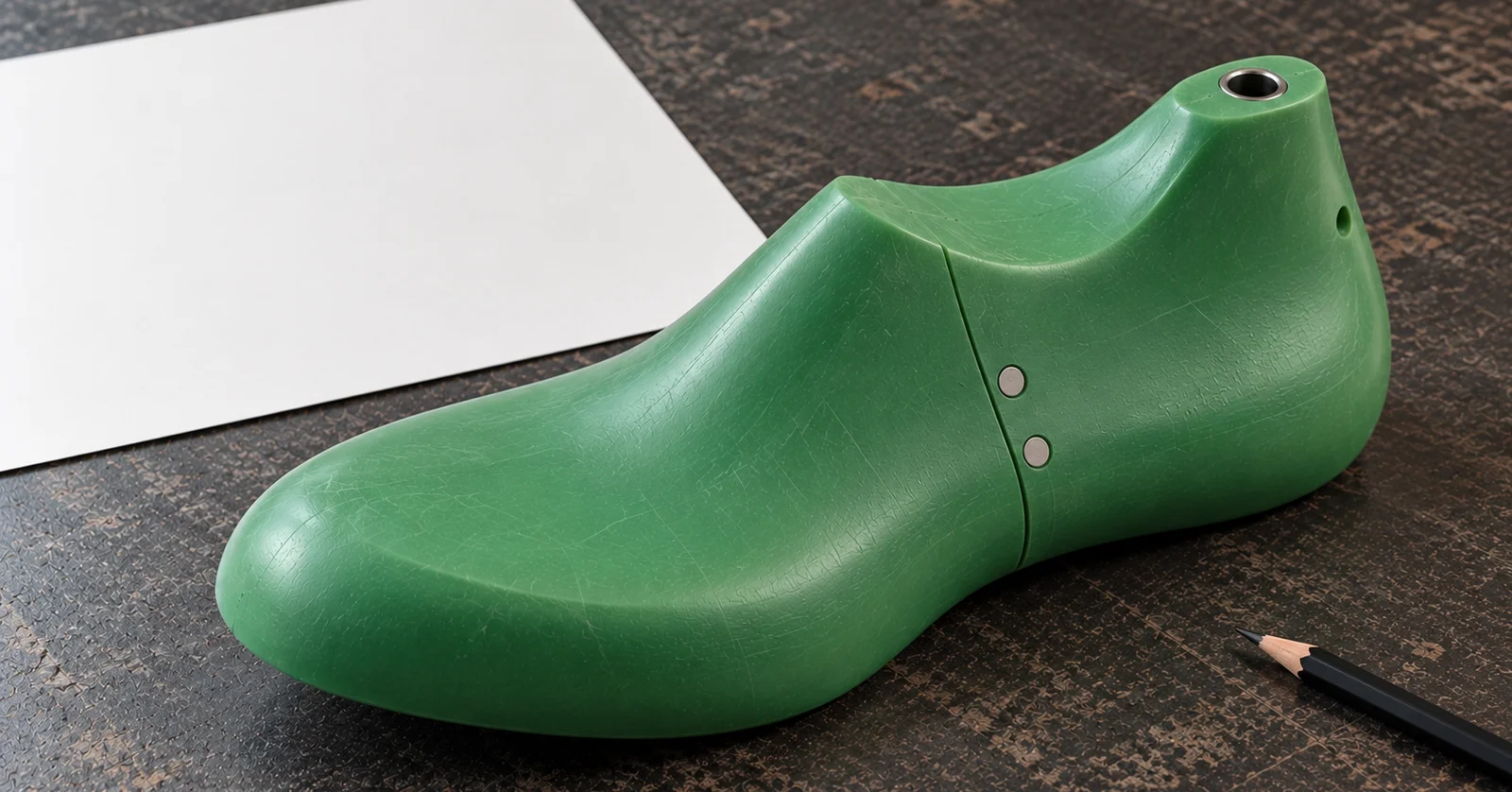
A shoe last is the three-dimensional form used to shape a shoe during manufacture. It gives the developer a physical or digital object to discuss; a photograph of its toe shape is only one view of that object.
SATRA identifies the last, the wearer’s foot and the finished shoe as distinct parts of the fit discussion. It also notes that upper materials, pattern design and manufacturing processes influence the finished shape. [1]
The buyer’s task is therefore to give the developer a defined problem, rather than approve fit from the bare last alone.
Scope: this is a development-input guide for ordinary footwear projects. It provides no medical prescription, universal toe allowance, width conversion or machining instruction. Specialist footwear needs its own qualified development and review process.
Define the wearer and the wearing conditions
“Men’s casual shoe” describes a category. It leaves many project choices unstated. Describe the intended wearer and use in terms your team can substantiate.
Start with these inputs:
- Intended use: what the shoe is being developed for, and which activities matter to the review.
- Wearer information: the target customer group and the relevant measurements or fit information you actually possess. Mark assumptions where you lack data.
- Wearing setup: intended socks, insert arrangement and fastening configuration.
- Fit objective: what you want to preserve or investigate at the forefoot, instep and heel.
- Size scope: proposed sample size and intended commercial range, with the labelling system stated.
For example, “retain the reference shoe’s forefoot feel while reviewing heel retention in our proposed upper” gives a developer a discussion task. It remains an objective to investigate, not a claim that the last can deliver both without other changes.
If only one person has tried the sample, say so and keep their feedback specific to that pair and setup. Discuss with the person handling development what further fit checks are needed for your intended customers.
Give each reference shoe one clear job
A reference can communicate appearance, a particular fit observation, or a construction direction. Tell the developer which role it serves and which features should not be carried over.
| Reference role | Information to provide | What remains to be established |
|---|---|---|
| Visual direction | Identified views and the proportions you want to discuss | Whether the proposed construction can deliver that direction |
| Fit benchmark | Actual pair, labelled size, reviewer and wearing setup; specific observations | How those observations translate to the proposed shoe |
| Construction discussion | The component or arrangement being considered | Its suitability and compatibility in this project |
Avoid a request such as “copy the fit of this size.” Instead, identify what feels satisfactory, where the reviewer wants a change, and what is still unknown. Use references you can legitimately share; a reference is not permission to reproduce another brand’s protected design.
Keep foot measurements, last measurements and observations from a finished shoe in separate fields. Ask the developer to identify the measurement method and location used for any numerical proposal. A shared number without a shared definition is difficult to compare.
Bring construction assumptions into the conversation
Before treating a last proposal as a settled direction, ask what shoe configuration the developer has assumed:
- Which upper and lining versions are being considered?
- Which sole or bottom reference must be reviewed with the proposal?
- Which insert or foot-contact arrangement will the sample use?
- Which fastening and opening details are defined, and which remain provisional?
The purpose is to expose dependencies, not to have the buyer solve each technical relationship. Ask the developer to flag conflicts and explain which decisions must be settled together. If the sole route is still open, compare existing bottom tooling with a custom sole route before treating a proposed last and bottom as a fixed pairing.
For insert comparisons, keep the original arrangement and sample setup visible. If the proposal changes the upper or bottom as well, record that before interpreting the next fit observation. When two foot-contact arrangements are genuinely under consideration, compare the insole options against the same sample and fit question.
Build a last-selection input brief
Start with what you have: the reference shoe, intended use, sample size and any fit feedback. Use the table below to organise the discussion, leaving gaps visible so you and the supplier can agree what to confirm next.
| Input | Buyer supplies | Developer or last maker confirms |
|---|---|---|
| Project and decision | Product reference; what this round must decide | Scope of the proposed last work |
| Wearer and use | Intended user group, use conditions and available fit information | Information gaps affecting the proposal |
| Reference shoes | Pair/version, labelled size, reference role and relevant observations | What can be assessed from those references |
| Wearing setup | Socks, insert and fastening assumptions; for an active-use shoe, name one movement question this sample must check, such as heel hold or forefoot flex. | Conditions required for a meaningful sample review |
| Construction | Current upper, lining and bottom references; provisional choices | Dependencies or conflicts needing review |
| Size scope | Proposed sample size, labels and intended range | Base-size proposal and further size-review plan |
| Proposed last | Known constraints or existing references; any use boundary the team needs clarified. | Last reference and size; how the proposed version will be identified, such as by photos, a physical sample or an agreed file; which assumptions still need sample evidence |
| Next check | Decision owner and unresolved question | Sample proposal, reviewer and evidence needed |
Carry the agreed inputs into your footwear Tech Pack. Keep the reference list and unresolved items alongside the current versions so that colleagues can trace the proposal back to its basis.
Ask why this last is being proposed
Ask the supplier why they recommend an existing last, a modification or new development for your project. Discuss the likely cost and timing alongside the technical changes, so you can judge whether the route is worth taking:
- Existing last: which requirements does the identified version address, and which still need checking in a sample?
- Modified last: which part would change, what would stay fixed, and which connected components need review?
- New development: which requirement cannot be addressed by the available proposals, and what inputs are still needed to define the work?
These are questions for evaluating a proposal, not a ranking of development routes. Do not assume a new last is automatically the better choice.
Use the answers to make a stage decision:
| Decision | Use it when | Record before moving on |
|---|---|---|
| Proceed with the proposed route | The supplier can identify the proposed version, connect it to the stated inputs and define what the next sample will check. | Proposed route, version, sample setup and the question being tested. |
| Clarify before sampling | An input, construction assumption, use boundary or sample condition is still missing. | The exact missing input, who will provide it and what can wait until it is confirmed. |
| Reconsider the route | The supplier cannot explain what the existing, modified or new route is intended to address, or several important conditions would change together. | The unresolved conflict and the inputs or alternative proposal needed to reopen the decision. |
Use a focused request:
Please identify the last version you propose, explain which parts of our input brief it addresses, and flag the assumptions still open. If you recommend a modification or another construction change, describe what would change and what the next sample would need to verify.
Illustrative input record — not a client project:
- Preserve: the identified reference pair’s visual toe direction.
- Investigate: a reviewer reported heel movement in the proposed shoe sample.
- Changed condition: the sample used a different upper from the reference pair.
- Next request: ask the developer which proposal and setup should be reviewed, what it would change, and what observation would close the question.
That record separates the design intention, observation and missing explanation. It gives no basis yet for attributing the movement to the last alone.
Avoid an unexplained “make it narrower” instruction. State the observation first, then ask the developer to propose a response and identify its consequences. This leaves the technical recommendation with the person responsible for assessing the complete proposal.
Make the first sample test the stated question
A last measurement check and a finished-shoe fit assessment answer different questions. SATRA distinguishes verification of stated last dimensions from expert assessment of the last, and describes finished-footwear assessment using measured fit subjects. [2]
Agree which question you are closing at each stage. Receiving a dimension sheet does not mean a finished-shoe review has happened.
- 1Identify the proposal and sample setupRecord the last reference, size and revision alongside the upper, bottom and insert versions. Note what differs from the reference shoe or earlier sample.
- 2Assign a review taskAgree who will try the sample, how they will wear it and what they should look for. If the decision needs measurements or a more specialised assessment, confirm who can carry that out before arranging the review.
- 3Record the decision and remaining workState what can proceed, what requires another input or sample, and who owns the unresolved item. Identify further sizes that need review rather than assuming the first sample settles the whole range. A direction can proceed to another sample while its finished-shoe fit approval remains open; name the stage so the two decisions are not confused.
Use actionable shoe sample feedback to turn the review into specific, versioned comments. Preserve what was observed separately from the proposed explanation or correction.
Before accepting a last direction, your team should be able to answer three questions: What inputs does this proposal address? What assumptions remain? What will the next sample establish? If the answers support a defined route and check, proceed to that sample. If an input is missing, clarify it first. If the route itself cannot be explained, reconsider it before treating the reference number as an approval.